
A Short Biography
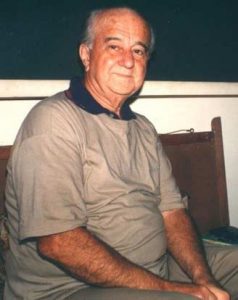
Sándor was born in 1916 in Gyertyámos, then part of the Austro-Hungarian Empire and now located in present-day Romanian portion of the Banat. He grew up in Alsógáld, a city pulsing with intellectual vitality and rich cultural expression. This vibrant milieu likely nurtured his deep appreciation for the arts and music, leading him to study lyric singing with the dream of becoming an opera tenor. Yet destiny called him toward healing, and he answered by pursuing medicine, graduating from Budapest’s Pázmány Péter University in 1943 with a specialization in gynecology and obstetrics.
The outbreak of World War II shattered the peaceful trajectory of his early life. As Russian forces advanced westward, his family was compelled to flee Hungary in April 1945, joining the vast exodus of displaced persons seeking refuge from the devastation of war.
Amid this upheaval, Sándor’s true calling emerged. Working with the Red Cross in refugee camps, he witnessed suffering on an unprecedented scale. Moved by profound compassion, he began experimenting with gentle touch and slow, deliberate manipulations applied to the extremities—feet, hands, and head—of traumatized individuals. Through this intuitive and caring approach, born of necessity and refined through careful observation, he developed the sequence of therapeutic touches that would become known as Calatonia.
Following the war, Sándor spent three years working in German hospitals before eventually migrating to Brazil. During this crucial period, he applied his emerging method to severely traumatized patients in neuropsychiatric wards. His gentle touch proved remarkably effective in addressing post-war trauma, depression, suicidal ideation, catatonic states, phantom limb pain, and numerous other manifestations of psychological and somatic distress.
Arriving in Brazil in 1949, Sándor established himself as a distinguished Jungian psychotherapist and soon became an admired figure within the psychological community. His reputation grew not through self-promotion but through the depth and integrative scope of his therapeutic approach, which seamlessly wove together his medical training, his innovative touch work, and his remarkable understanding of the human psyche.
Despite his professional acclaim, Sándor remained steadfastly committed to simplicity and privacy. He actively avoided any form of personal adulation, choosing instead to live with striking modesty and quietude. His lifestyle was deliberately unadorned, free from ostentation or material excess. Paradoxically, this very simplicity seemed to amplify rather than diminish the respect and admiration he inspired in all who encountered him.
Sándor found renewal and inspiration at his beloved ranch in Pocinhos do Rio Verde, in the state of Minas Gerais, where he spent alternate weekends and six weeks each summer. There, surrounded by the natural world he cherished, he divided his time between translating previously unpublished works by Jung and other depth-psychology pioneers for his study groups, and tending the land with his own hands. This intimate connection to the earth and to growing things nourished both his scholarly pursuits and his spiritual development.
A man of profound spiritual depth, Sándor possessed an extraordinary relationship with his own mortality. In early 1991, with characteristic calm and clarity, he announced to his students that he would have “an opportunity to transition” within the coming year. Despite his robust health, sharp intellect, and undiminished wit, Sándor passed away peacefully in his sleep at his cherished ranch in January 1992—exactly within the timeframe he had so intuitively predicted.
His death, like his life, was marked by the same quiet dignity and wisdom that had characterized his entire journey, from war-torn Europe to the healing sanctuary he created through his method.
